 Daniel Morgan
Natural gas, inventories, weather and supply
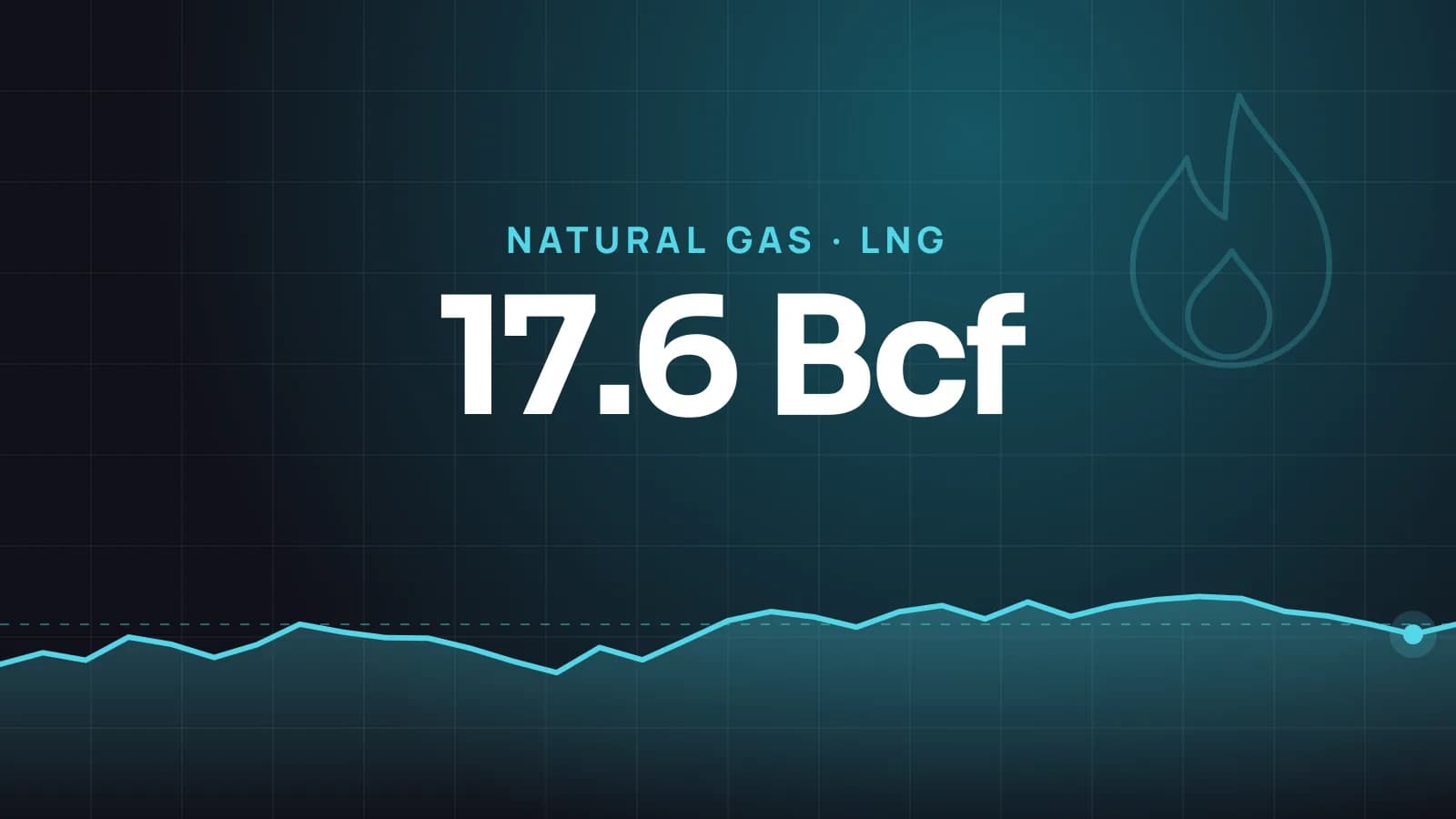
The US LNG export forecast points to further growth as new capacity ramps up, according to the EIA’s November outlook. The agency projects average exports of 17.6 billion cubic feet per day in 2026 and 19.0 Bcf/d in 2027, compared with 15.1 Bcf/d in 2025. [1]
Exports are one side of the balance
The outlook was released November 10, with forecasts completed November 5. The EIA expects production growth to exceed the increase in domestic demand and exports, leaving average 2027 inventories about 3% above 2026 levels. These are projections rather than confirmed annual results. [1]
The combination is important: rising exports do not automatically imply a tighter domestic balance if supply grows faster. Equally, a national production forecast does not guarantee that gas will be available at every terminal or regional demand centre.
Analysis: capacity and utilisation are different
An export facility’s nominal capacity describes its potential throughput under specified conditions. Actual exports depend on commissioning, maintenance, feedgas availability, vessel schedules and the operation of downstream equipment.
A new train can therefore contribute gradually rather than immediately reaching its full capacity. Temporary outages can interrupt that contribution even after commercial operation begins. Forecasts need assumptions about both the amount of installed capacity and how consistently it runs.
Overseas demand also does not translate directly into domestic consumption without the infrastructure that connects the markets. Liquefaction, shipping and regasification impose physical constraints and costs between US gas production and an importing country’s end users.
Global price gaps are not pure margins
A difference between overseas gas prices and Henry Hub can indicate an economic incentive to export, but it is not the exporter’s net profit. Transportation, fuel use, contractual terms and other expenses stand between the benchmark comparison and realised earnings.
Contracts can further alter exposure. Some participants may have fixed obligations or pricing formulas that make their economics different from a simple spot-market calculation. The same headline spread can therefore affect companies in different ways.
For domestic consumers, weather and power demand remain important alongside exports. A period of severe cold can increase local consumption and challenge production or transport at the same time. Annual averages can conceal those shorter periods of stress.
What traders should watch next
Watch verified terminal operations, feedgas flows and production data to assess whether the forecast path is being realised. Compare monthly and annual measures consistently rather than extrapolating a single strong day into a full-year record.
Follow changes in the EIA’s assumptions when the next outlook arrives. The current projection supports an expanding export role, but the domestic price implication depends on the complete supply-and-demand balance and the reliability of the infrastructure connecting it.
Sources and verification
Verified November 15, 2026, Asia/Manila. Observations retain their stated dates. Analysis is editorial interpretation; forecasts are not confirmed outcomes.
#Xquote #LNG #NaturalGas #USGas #EnergyExports #HenryHub
Risk disclaimer: Trading and leveraged products can cause substantial losses. General information only; not personalized investment advice.