 Ethan Nakamura
Forex and central-bank developments
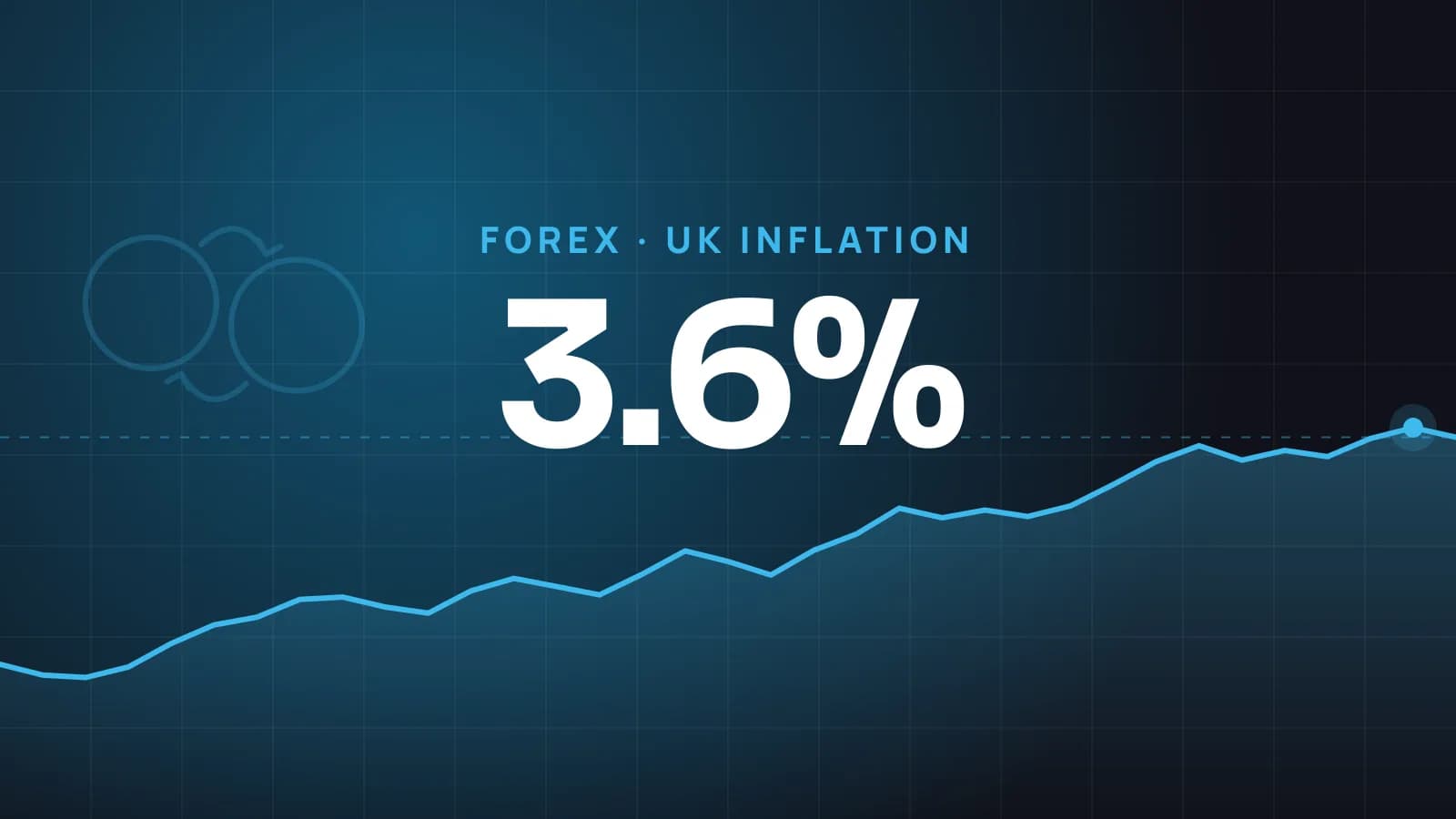
UK inflation in October rose to 3.6% from September's 3.5%, according to the Office for National Statistics release on November 18. Core CPI was 2.8%, little changed from the previous month, leaving currency traders with differing signals about the breadth of price pressure. [1]
Fuel lifts the headline
Transport, particularly motor fuels, made the largest upward contribution to the change in annual inflation. Restaurants and hotels provided the largest offsetting downward contribution. Monthly CPI increased 0.5%, compared with 0.4% in October 2025. [1]
CPIH, which includes owner occupiers' housing costs, rose 3.7% over the year. It is a separate measure and should not be substituted for the CPI figure when discussing the release. The next publication is scheduled for December 16. [1]
Analysis: composition shapes the policy question
An increase concentrated in fuel presents a different policy problem from a broad acceleration across domestic services. Fuel costs can affect households immediately and then move through transport and business expenses, but the size of any subsequent pass-through remains uncertain.
The core measure helps examine pressure beyond selected volatile categories. It is not a complete measure of the cost of living, since households still pay for the items excluded from it. Reading headline and core inflation together gives a more useful picture than choosing whichever number supports a preferred policy narrative.
For sterling, a stronger inflation reading can influence expectations about the duration of restrictive monetary policy. Yet the currency response also depends on what was expected before publication and on policy developments in other countries.
Higher inflation does not guarantee currency strength
Inflation can raise expected interest rates while weakening purchasing power. Those channels can pull the exchange-rate assessment in different directions. The balance depends on growth prospects, credibility and relative returns rather than a mechanical relationship between CPI and the pound.
A monthly increase also needs its comparison period. Annual inflation can rise because current prices accelerate, because an unusually weak month drops out of the calculation, or through both effects. The ONS monthly and annual figures help distinguish those possibilities.
What traders should watch next
Watch whether future releases show fuel costs spreading into a wider range of prices. Wage developments and service-sector inflation can provide additional evidence about persistence, while official central-bank explanations indicate how policymakers interpret the mix.
The December 16 inflation release is a scheduled information event, not a known outcome. Until fresh evidence arrives, October's combination of a higher headline rate and broadly steady core inflation supports a conditional assessment of sterling's policy backdrop rather than a certain forecast of its direction.
Sources and verification
Verified November 19, 2026, by 6:09 a.m. Asia/Manila. Observations retain their stated dates. Analysis is editorial interpretation; forecasts are not confirmed outcomes.
#Xquote #GBP #UKInflation #Forex #BankOfEngland
Risk disclaimer: Trading and leveraged products can cause substantial losses. General information only; not personalized investment advice.