 Adrian Bennett
Bonds, interest rates, credit markets and the global economy
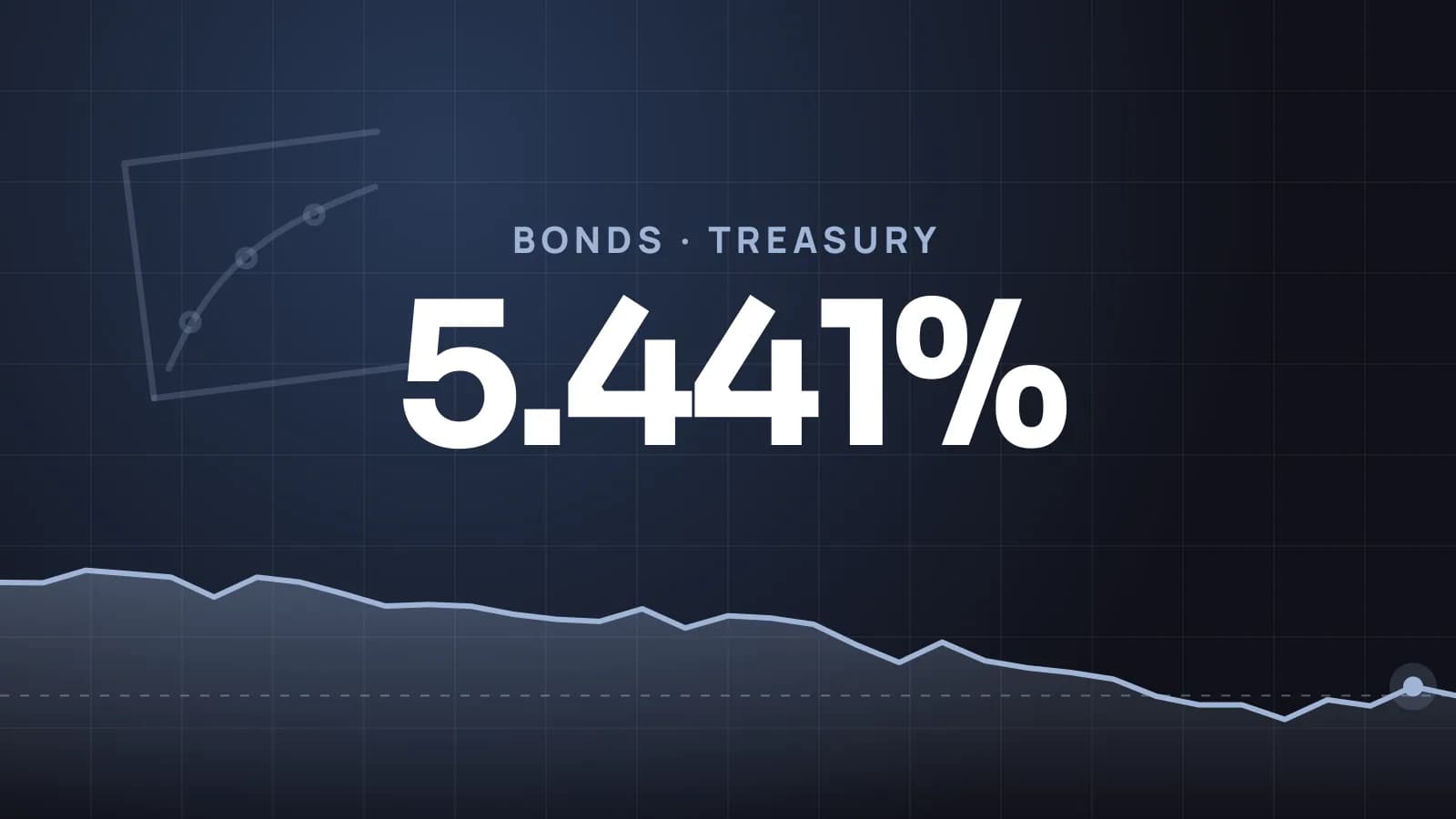
The new 30-year Treasury bond is scheduled to settle on November 16 after the November 12 auction cleared at a 5.441% high yield. The result gives bond-market readers a confirmed issuance benchmark as attention shifts from bidding to settlement and subsequent trading. [1]
The official terms of the sale
Treasury offered $25 billion of the bond, which matures on November 15, 2056. Its coupon is 5.375%, and the auction price was 99.028979 per $100 of principal. The reported bid-to-cover ratio was 2.36, based on approximately $59.05 billion of recognised bids against $25.00 billion awarded within the offering. [1]
The security formed part of the quarterly refunding package announced November 4. Treasury said the combined $125 billion package would refinance approximately $97 billion of privately held maturing notes and bonds and raise about $28 billion in new cash. [2]
Analysis: coupon and yield answer different questions
The coupon specifies the interest payment rate on the bond’s principal. The auction yield incorporates the price paid and the cash flows through maturity. A bond sold below par can therefore carry a yield above its coupon without any inconsistency.
That distinction also prevents a common comparison error. The auction yield records the terms at a particular sale. A later secondary-market yield can move as prices change, so the auction result should not be presented as a live quotation for the security.
Long maturity adds sensitivity to changes in required returns. Payments extending far into the future are affected by revisions to inflation expectations and the compensation investors demand for holding duration. A known coupon does not eliminate price volatility for someone selling before maturity.
Demand needs more than one ratio
Bid-to-cover summarises the volume of bids relative to the amount awarded. It does not by itself show whether the auction cleared at an attractive level compared with the market immediately beforehand. That assessment requires a properly timed comparison with pre-auction pricing.
Similarly, a large number of bids does not imply that every bidder was willing to accept the final yield. The distribution of bids and allocations matters. Without verified contemporaneous pricing, labelling the auction a clear success or failure would go beyond the evidence used here.
What traders should watch next
Watch trading after issuance and the relationship between the new bond and comparable maturities. A move in the broader yield curve may reflect new economic information rather than the mechanics of this auction alone.
Funding conditions around settlement can also matter, but the scheduled exchange of cash and securities is not evidence by itself of market stress. The useful comparison is between observed conditions and their recent pattern.
For future auctions, compare size, maturity, pricing and demand on consistent terms. The November 12 result establishes what Treasury sold and at what yield; it does not determine the returns subsequently earned by buyers or the next direction of long-term rates.
Sources and verification
Verified November 16, 2026, by 6:08 a.m. Asia/Manila. Observations retain their stated dates. Analysis is editorial interpretation; forecasts are not confirmed outcomes.
[1] US Treasury: November 12 official 30-year auction results
#Xquote #Treasuries #Bonds #FixedIncome #BondMarket #InterestRates
Risk disclaimer: Trading and leveraged products can cause substantial losses. General information only; not personalized investment advice.