 Sophia Williams
Crude oil and global energy
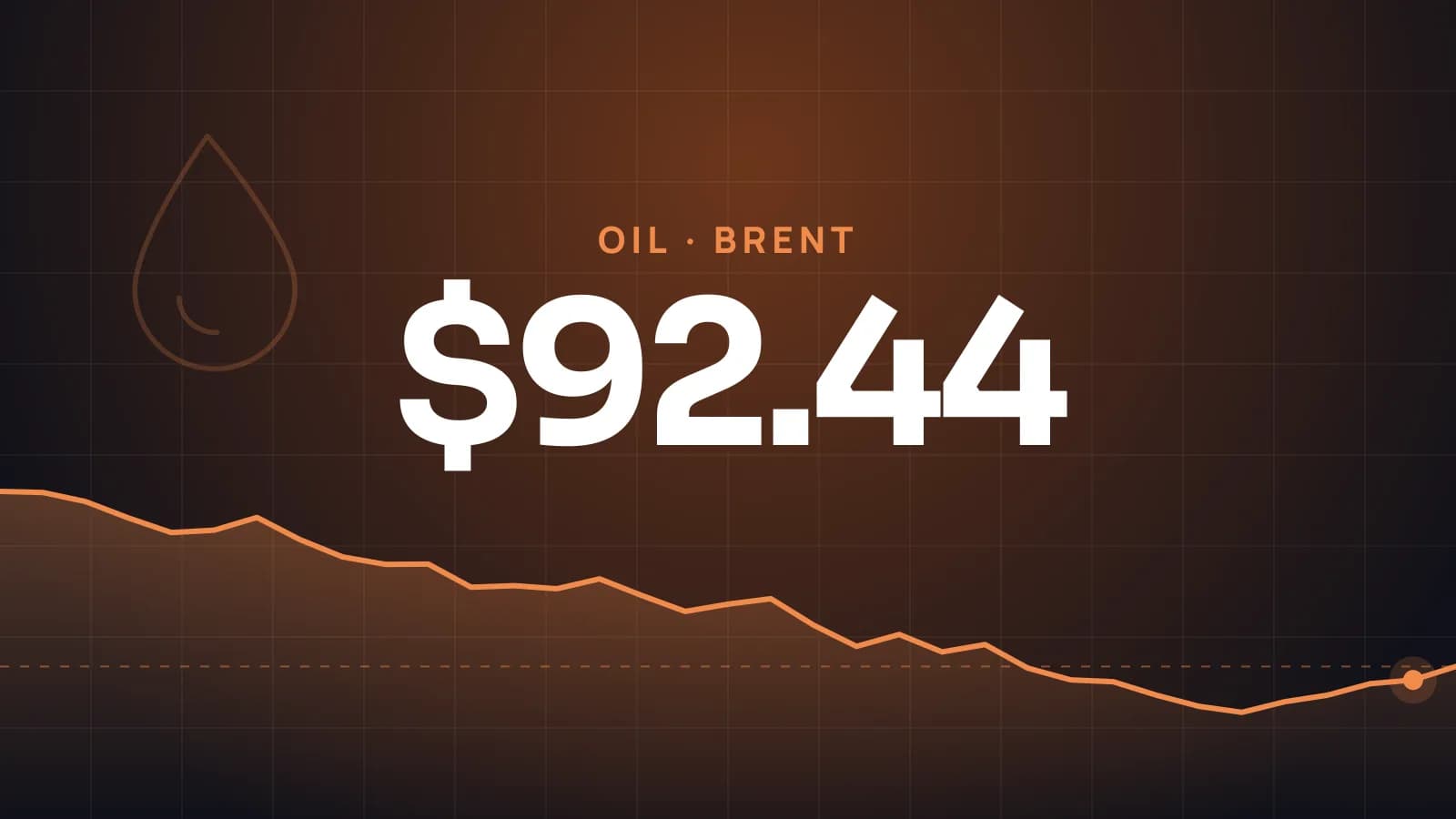
Brent oil settlement prices fell on November 16 as expectations of improving supply weighed on the market. January Brent closed at $92.44 a barrel, down $3.40, while December WTI settled at $85.72, down $2.84, according to Newsquawk’s dated settlement report. [1]
Supply expectations weighed on crude
Reuters attributed the decline to recovering Middle Eastern exports and expectations of a fourth-quarter surplus. Its report also highlighted continuing shipping risks, illustrating why an improving balance forecast does not remove uncertainty around delivery. [2]
The quoted prices are futures settlements for specified contracts. They are not live spot quotations or guaranteed transaction prices for the next session. The different delivery months also matter when comparing Brent with WTI.
Analysis: a surplus requires barrels to arrive
A projected surplus is an estimate of supply exceeding demand over a period. Translating that projection into market relief requires production, shipping, unloading and storage to function. A cargo available at an export terminal does not necessarily ease an importing region’s immediate shortage.
This creates a distinction between a global balance and local availability. The world can appear better supplied in aggregate while particular grades, regions or delivery windows remain tight. Freight costs and transit time help determine whether supply can move to where it is needed.
The price response can also precede the physical change. Futures incorporate expectations, so a decline may reflect confidence that more barrels will become available later. If those expectations are not fulfilled, the balance of information can change again.
Contract structure provides additional context
The relationship between nearby and later delivery prices can help frame how urgently the market needs crude. It should be examined with actual contract data rather than inferred from the outright settlement alone. A lower headline price does not establish that every part of the futures curve moved in the same way.
Brent and WTI also represent different crude benchmarks and delivery arrangements. Their price difference is not a simple measure of global shortage. Regional logistics, quality and export economics can influence the spread independently of the broader demand outlook.
What traders should watch next
Watch confirmed export volumes, cargo arrivals and inventory reports for evidence that the expected recovery is becoming available supply. Refinery demand matters because stronger crude processing can absorb some of the additional barrels.
Verified shipping developments should be distinguished from unconfirmed incident reports. A reported disruption needs evidence about its duration and effect on flows before its market significance can be assessed confidently.
The November 16 settlements provide a clear historical reference. Subsequent trading should be evaluated against fresh information about supply and demand, rather than treating one session’s decline as proof that geopolitical risk or physical tightness has ended.
Sources and verification
Verified November 17, 2026, by 6:10 a.m. Asia/Manila. Observations retain their stated dates. Analysis is editorial interpretation; forecasts are not confirmed outcomes.
#Xquote #Brent #WTI #CrudeOil #EnergyMarkets
Risk disclaimer: Trading and leveraged products can cause substantial losses. General information only; not personalized investment advice.