 Lucas Reed
Bitcoin, Ethereum, crypto regulation and digital assets
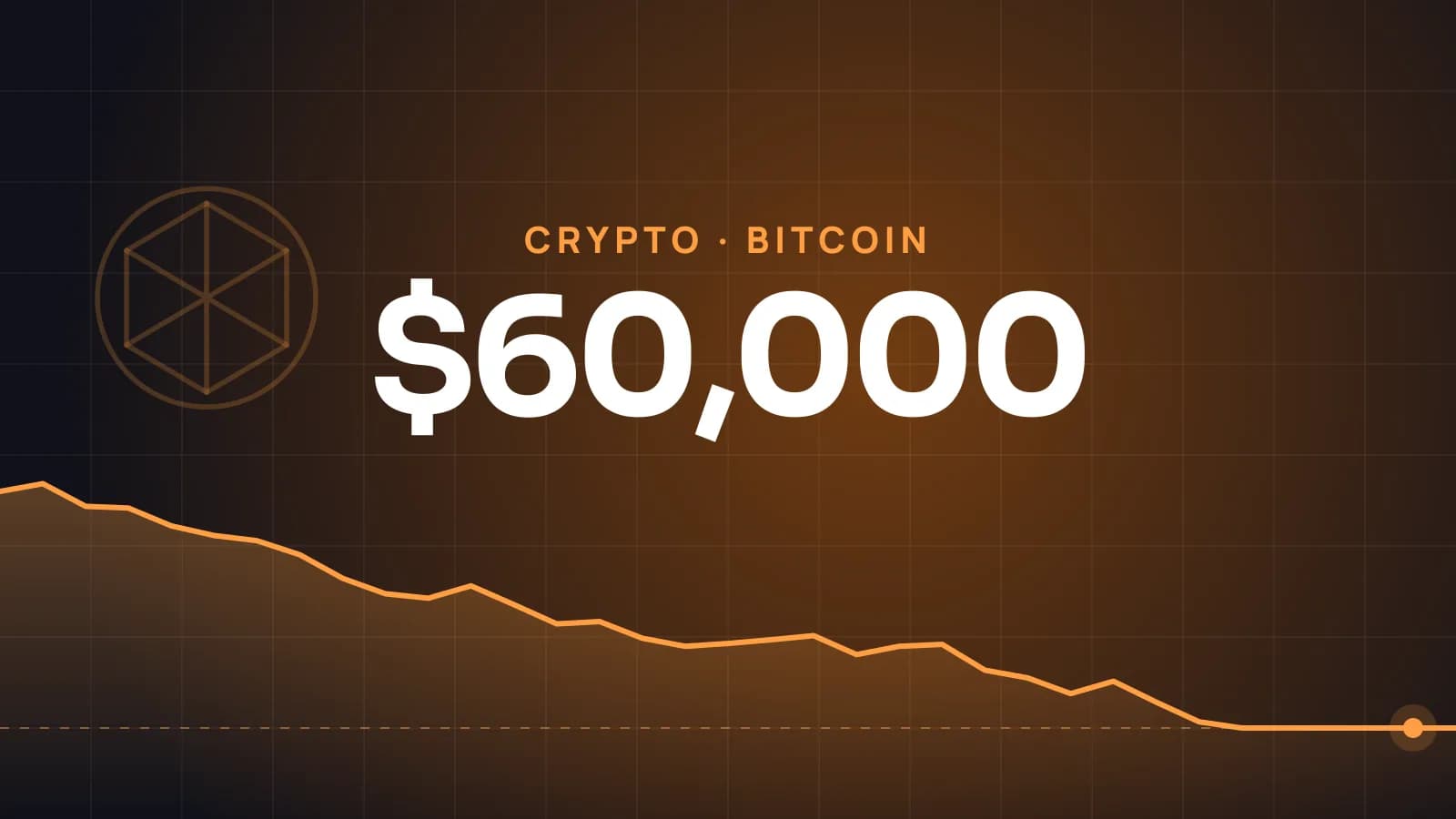
Bitcoin traded below $60,000 on November 20 amid weaker appetite for risk assets, Reuters reported. The threshold crossing is a dated market event, not a statement that Bitcoin remains at the same level at this edition's publication. [1]
A threshold is an observation, not a valuation
The Reuters report connected crypto weakness with concerns surrounding the AI trade and other risk assets. That provides context for the session, but does not establish that a single external event explains all cryptocurrency selling. [1]
Round numbers are easy reference points for market participants. Crossing one can draw attention to existing positioning, but the number itself does not establish an asset's fundamental value or a reliable stopping point for a decline.
Analysis: liquidity determines the cost of adjustment
When many holders want to reduce exposure at once, the available buying interest determines how far prices must move to absorb those sales. The size of the order book matters alongside the total amount traded over a day.
High reported turnover does not necessarily mean a large position can be executed near the displayed price. Trading may be concentrated around small orders or particular venues. Assessing liquidity therefore requires attention to spreads, depth and the conditions under which orders are filled.
Leverage can amplify adjustment. If declining prices reduce collateral value, some participants may need to add funds or close positions. Such feedback is a possible market mechanism; this article does not assign an unverified liquidation total to Friday's move.
Cross-market links can change over time
Bitcoin can trade alongside equities during one period and respond to different influences during another. A shared decline does not prove that the same buyers, sellers or valuation assumptions drove both markets.
Likewise, Bitcoin and Ethereum should not be treated as interchangeable exposures. They operate in different ecosystems and can face distinct sources of demand and supply. A broad crypto headline is a starting point for analysis, not a substitute for examining each asset.
Continuous trading adds a timing issue. Cryptocurrency markets remain active while many traditional markets are closed. Comparing a weekend crypto quotation with a Friday equity close requires making that mismatch explicit, especially when discussing relative performance.
What traders should watch next
Watch whether market depth and spreads stabilise after the threshold break and whether selling remains concentrated or broadens. Venue-specific data should be labelled clearly rather than presented as the entire market.
Distinguish actual fund flows and completed transactions from social-media narratives about why prices moved. Any regulatory development should be checked against the relevant official announcement before being treated as a new rule.
The confirmed event is Friday's move below $60,000. Its implications depend on subsequent trading conditions and evidence about demand, rather than the assumption that a familiar price level guarantees support or further losses.
Sources and verification
Verified November 21, 2026, by 6:07 a.m. Asia/Manila. Observations retain their stated dates. Analysis is editorial interpretation; forecasts are not confirmed outcomes.
#Xquote #Bitcoin #BTC #CryptoMarkets #DigitalAssets
Risk disclaimer: Trading and leveraged products can cause substantial losses. General information only; not personalized investment advice.